
During the last two years, I gained a lot of experience as a speaker. I visited a lot of conferences, and I watched how they handle speakers. At WebExpo in Prague, I had to take part in a thing called feedback sessions. It was such a great experience that I decided to implement it in Gdynia.
What are feedback sessions?
It’s a very simple idea - you gather in groups of 3-5 people (including a person who leads such a session), and everyone presents their talk. Afterwards, everyone (including the speaker) lists what they liked and what can be improved.
Because those sessions happen at least a week before the event, people have a lot of time to improve their talks based on the feedback.
Why did I want to have them at WordCamp Gdynia?
Let’s be honest, all speakers know their topic for their talk very well. But they fall short in other departments:
- not practicing enough
- preparing the slides at the last moment, which results in a lack of polish
- putting too much text on the slides
Feedback sessions give you an early deadline, so it means that you will start working on your talk earlier.
Also, I know how stressful public speaking can be. Especially when you’re doing it for the first time. This way, you have an opportunity to do a dry run in front of people you don’t know, but in a safe environment.
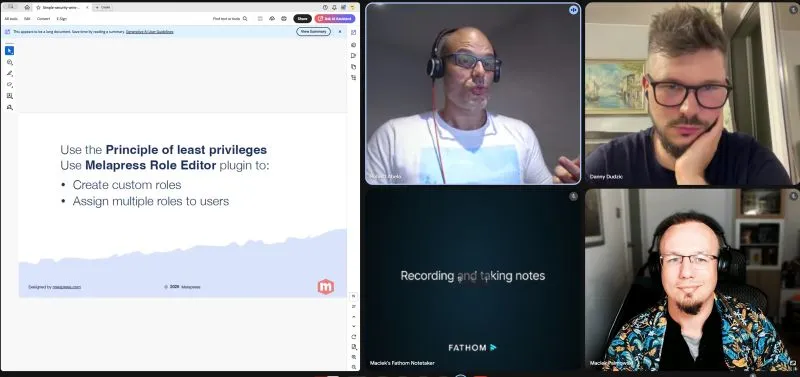
How did it work in Gdynia?
Really well. Based on all the sessions we did, I can tell that all the presentations were really good content-wise. In most cases, we had to polish some details.
Slide layout
This was one of the most popular mistakes people made - they put too much text on slides. I always advised in such cases to remove most of it. Slides should only be a roadmap of your talk, not the full scenario with all descriptions.
People are coming to your talk to listen to you, not to read slides.
Order and flow
Every story should start with a strong statement. Very often, those statements were buried somewhere later in the slides. Very often, we had to move slides around to make the flow more natural and interesting.
Removing useless stuff
In Gdynia, speakers only had 20 minutes for their talks. So removing every unnecessary stuff was crucial.
For example, because speakers were introduced by track hosts, I always advised removing intro slides and not talking about yourself.
Diving too deep? Out.
Too long example videos? Out.
Also, it was a great opportunity to answer some questions and share some tips.
What You Need to Know Before Running Feedback Sessions
If you want to conduct such sessions before your event, you have to remember some things.
They take a lot of time
In my case, each session took 40-45 minutes per speaker. So 2 speakers took around 80-90 minutes. And you have to run quite a few of them (in Gdynia, 15 people took part in them, divided into 6 sessions).
I won’t lie, in the end, I was tired. Very tired.
Next time, I will probably ask for help and divide the sessions between more people.
Be empathic but honest
Like I mentioned, public speaking is stressful. That’s why, when providing feedback, you have to be very careful in how you do it. One of the things I always encouraged all the attendees to start with the positives (fun fact, the Polish crowd automatically wanted to start with negatives, even when judging themselves).
On the other hand, if you see that something can be improved, just say it.
Be focused
Remember that people are using their free time to attend such a session. Take it seriously, take notes, and listen. Checking your email in the background is a total lack of respect.
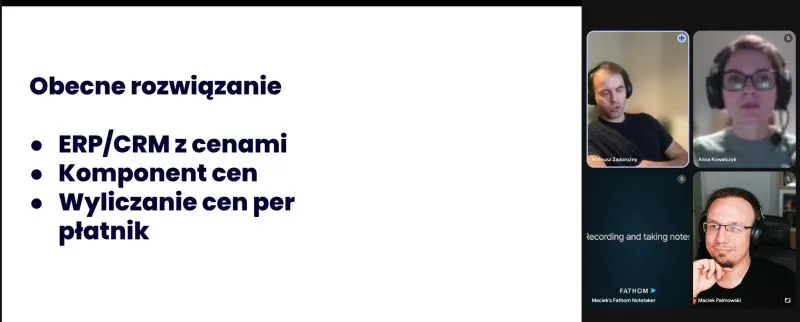
OK, I want to run my own feedback session - how should I do it?
We did it the simplest way possible:
- Set up a public spreadsheet with dates and the number of open slots, so people can sign up.
- Try to merge people in bigger groups rather than having one-on-ones.
- Move everything into Google Calendar and send invites.
- At a given time, connect using Google Meet (or similar).
- It’s a good idea to record and send the video afterwards.
Is it the best way? I don’t know, but it worked for us. WebExpo had a very similar flow.
To sum up
Afterwards, I did a survey amongst people who took part in those sessions, just to learn that 100% mentioned that those sessions were very useful. Also, when I asked all the speakers how they felt after their talk, they were happy.
And the attendees were very happy too. All speakers attending feedback sessions got really good feedback.
But you know what is the best recommendation? Magda Ślęzak, who took part in those sessions, decided to introduce them during WordCamp Wrocław too:
For us, WordCamp organizers, it’s important that event participants take part in quality presentations, and that speakers are satisfied with their talks. Maciek created a safe space for people preparing to speak during feedback sessions. Feedback between speakers, exchange of ideas, and sharing tips increased speakers’ confidence and often resulted in positive changes to presentation plans. That’s exactly why, after Gdynia, we’re also introducing feedback sessions in Wrocław.
Share your thoughts